
 By Carl Weinschenk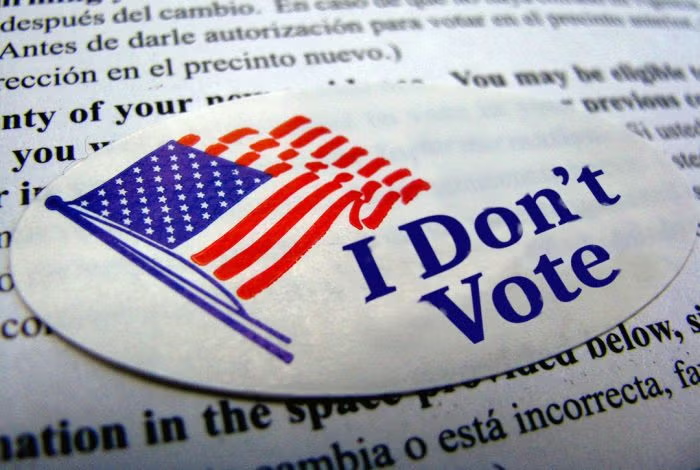
Folks have an aversion to saying that they aren’t going to do something because they simply don’t want to do it. They need a reason, a way of justifying their inaction.
That’s clearly something to think about when it comes to voting. The thought led me to create a list of reasons people give for not voting. It’s essentially a master class in defensiveness.
This is no small topic and, as a nation, we should be pretty embarrassed. About half of eligible voters exercise the right to vote during the presidential years. The percentage is even worse during the midterms–such as those coming up in less than six months–when only about 40% of folks go to the polls (or the mailbox). It’s extra frustrating because the reasons for not voting are, to be honest, pretty bad.
The Excuses for Not Voting Sound Tired
All politicians are the same. There was a grain of truth (albeit a small one) back in the day. For instance, look at 1976, when Jimmy Carter ran against Jerry Ford. Both were great men and true patriots. The two men’s goals differed incrementally. They believe in many of the same things.
That no longer is the case. Things are more polarized today. Donald Trump in particular and MAGA in general have political positions and belief systems that are orders of magnitude different than those in the center and left. That won’t change when Trump is gone (though MAGA’s coherence as a political movement likely will). The “all candidates are the same” argument is at heart cynical and nihilist. In today’s politics honest people choose a side.
The system is corrupt. There are several versions of this same basic rationalization. I won’t go through each one. The through line is the belief that the system has failed and is not worthy of the individual’s vote.
There is plenty of corruption in politics. It’s a world of a lot of money. Plenty of people try to do good with it and plenty of others try to fleece them. This is true all over the globe and will never be eradicated. It is a civic cancer that must be put into remission. The goal is to become more involved. Not less. Not paying attention clearly exacerbates the problem.
I have only one vote and it doesn’t matter. There also is a grain of truth in this one. Yes, your vote will never decide an election. Noted. Now go vote. And, by the way, all the folks who bother to show up understand that their one vote won’t decide an election. They do so anyway.

I’m too busy. This one can be divided into two parts. Middle class people generally can take time off from work to vote. Folks without jobs should have no problem carving out some time as well. However, this excuse has resonance among some lower wage workers. Employers play games and tighten the screws on election day. It’s a way of suppressing the vote.
And keep in mind that virtually every eligible person has some form of early voting available.
I hear about the potential for intimidation and even violence at the polls. People parachuted behind enemy lines during World War II. They were shot at in rice paddies in Vietnam. They were attacked by IEDs in the Middle East. Perhaps it’s fair that we take a chance–one that is infinitesimally smaller than those and thousands of others–to save our democracy. And, of course, nobody can attack somebody dropping a ballot at the post office and it’s doubtful that the bad people will show up during early voting.
I am a citizen and able to vote. But I don’t want to because of my skin color and ICE. This unfortunately has some merit. The situation has moderated somewhat during the past couple of months. Hopefully that trend will continue.
I don’t follow politics and have no idea who to vote for. It’s never been easier to find the basics about a candidate or the party to which he or she belongs. But even the worst-case scenario–voting without knowing anything–is better than not voting. In general, what each party espouses is consistent and it’s a ChatGPT or Claude session from understanding.
I am making a statement by not voting. I can’t argue with this. One has a right not to vote. The truth is that the system has taken a lot of hard hits during the past 25 years and needs to be upgraded. We need stronger campaign laws, legislation to defang the Citizens United Supreme Court decision, the elimination of the Electoral College and other upgrades. Backing these and other actions is far superior than just not paying attention. But we need to elect the people who will work to make these changes happen.
Always don’t forget to register.
Remember: There are a million excuses for not voting, But they are just that–excuses. Here are some helpful links that will make it easier to put the excuses behind. Click either on this link or this one for information on how to register and find your polling location.
(“I Don’t Vote” image: Andy Thrasher at https://www.flickr.com/photos/athrasher/; Infographic: ChatGPT)